
TIME AND BIOLOGICAL CLOCKS
The brain has been termed a time machine, a metronome,
orchestrating, second by second, the working of our bodies,
all the while conducting us from birth to old age.

An entire science chronobiology has been developed
to study how all living beings regulate their respective
time cycles.

Many bodily functions-awakening and sleeping,
the production of hormones within the body (the
concentrations of cortisol and growth hormone reach their
peaks in the early hours of the morning), the menstrual cycle,

Time and biological clocks
awakenings in moods and fluctuations in the temperature of the
a.m.)-body (the temperature drops to its. lowest around 4
are regulated by what is termed the biological clock within
us.

Our biological rhythms are principally based on the rising
and setting of the sun but continue with minor variations
even when we are placed in an environment where we are
deprived of these cues.

These rhythms are governed by the
hypothalamus and the Pineal gland deep within the brain.
The 24-hour biological cycle is termed a circadian
rhythms (from the Latin term for 'about a day').

Based on individual differences, we have such variations as 'morning'
persons (who show a rise in their body temperature at 3 a.m.
instead of at 5 a.m.) and 'night' persons who do not awaken
till 9 a.m. Such variations concern us as incompatibilities can
spell disaster.

When a 'night' person is on early morning duty
at a job that requires razor-sharp faculties, accidents-at
times of tragic dimensions-are likely. Likewise,
if the husband is up and about at 5 a.m. and the wife swings to
life around 8 p.m. (by which time he's drooping), the
incompatibility between fowl and owl may contribute to
immense frustration.

Acute derangement of the biological clock-as when
we fly across several time zones, especially from west to
east-results in what is termed the jet lag.
Fatigue, insomnia,
nausea and an inability to concentrate are the principal
features.

Experienced travelers advise us to start making
adjustments to the waking and sleeping times at the
destination a little before embarking on a long flight.
When flying from west to east-where we're travelling from a later time
zone to an earlier time zone and are thus losing time-we're
also advisèd to sleep on the flight and abstain from coffee
and such beverages that may keep us awake.

The recent advocacy of Melatonin must be viewed with caution and
needs to be monitored carefully.
In an interesting personal experiment in 1932, physiologist,
Hudson Hoagland, studied the effect of fever on the
perception of the passage of time.

His wife, ill with flu and
a fever of 104 degrees Fahrenheit, asked him to get some
supplies from the drug store. On his return she berated him
for having taken well over the 20 minutes he knew he had
taken.
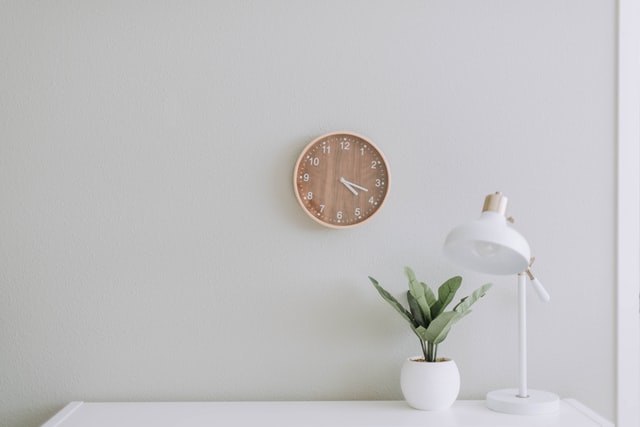
Musing on whether fever speeds up perceived pas-
sage of time in a manner similar to that by which it speeds
the heart rate, breathing and the frequency of chirping of
birds and crickets, he asked her to count from one to 60 at
what she perceived to be the rate of one per second.

When she had recovered fully, he repeated the experiment and was
delighted to find that she had counted faster whilst with
fever.
Comments
Post a Comment
Please do not enter any spam link in the comment box